Concept-Driven Research-through-Design
Silvia’s work is grounded in concept-driven design. Each project begins with a clearly articulated conceptual inquiry, translated into structured interventions that test how aesthetic and interaction decisions shape social perception.
Research Framework
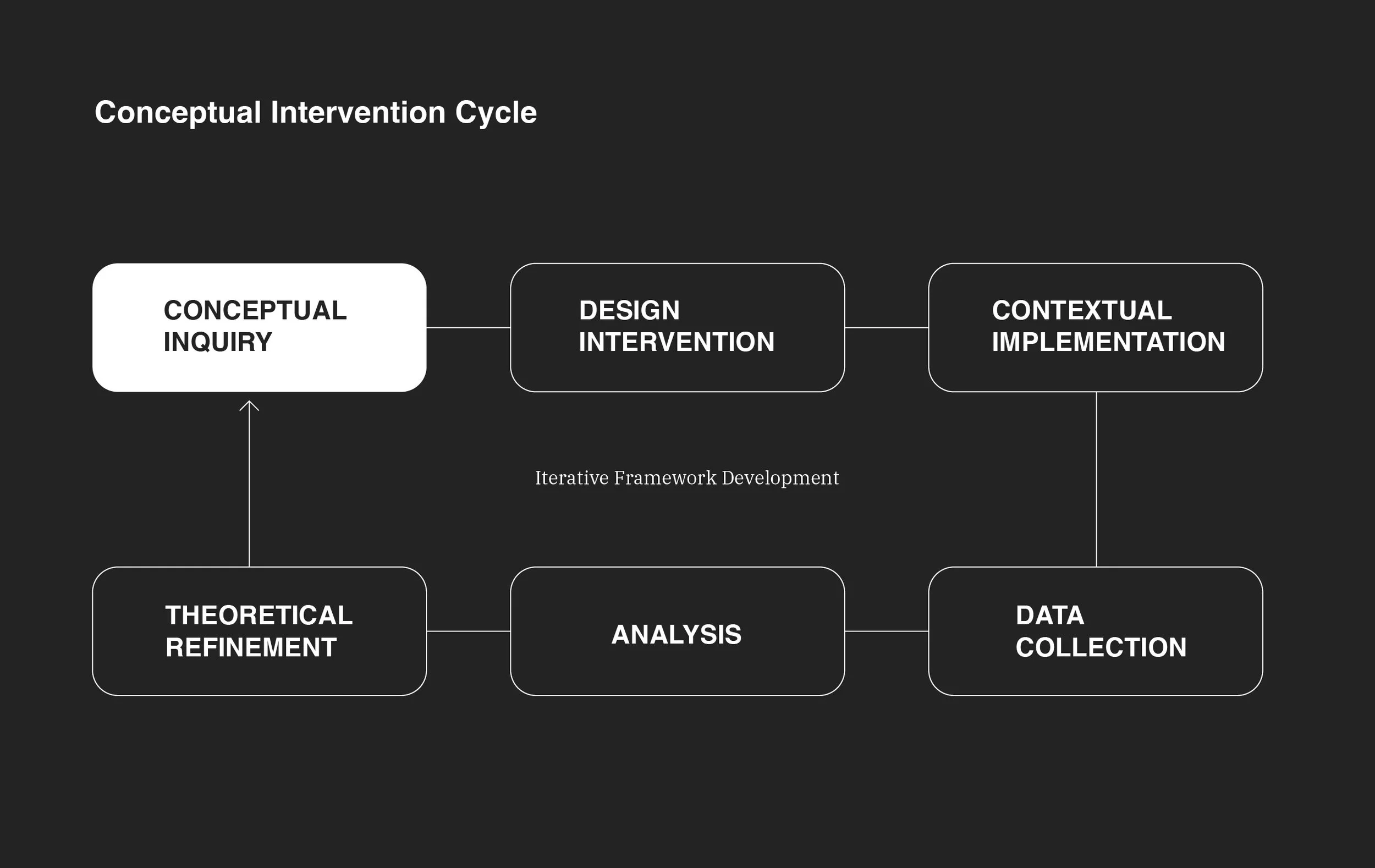
This research operates as a concept-driven framework deployed across socially situated contexts. While the social focus shifts, the methodological structure remains consistent, enabling cumulative and transferable knowledge development.
Methodological Structure
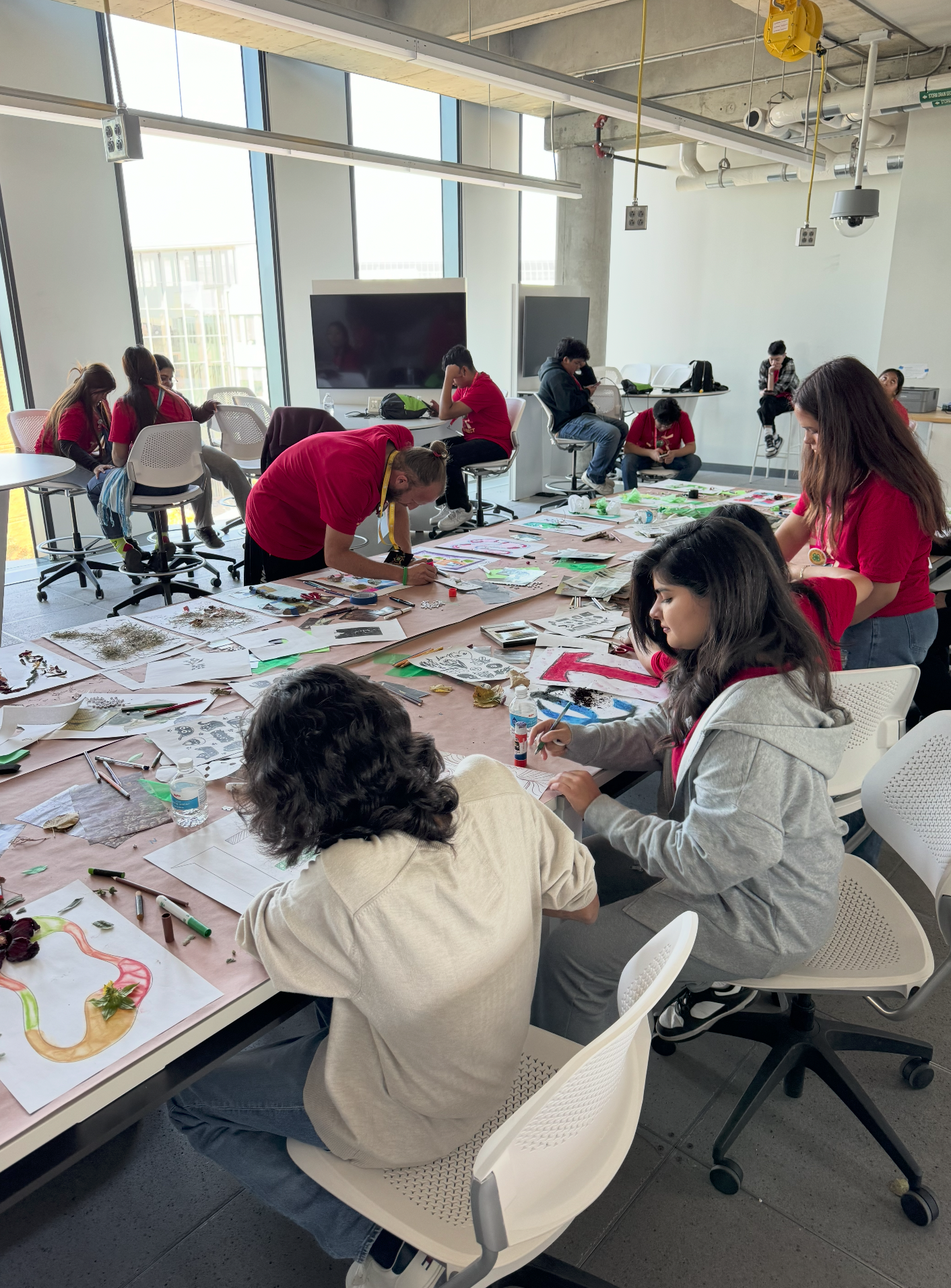
Participation
Design functions as a structured, facilitated inquiry. Participants engage through guided activities and artifact-making sessions that render perception observable and analyzable.
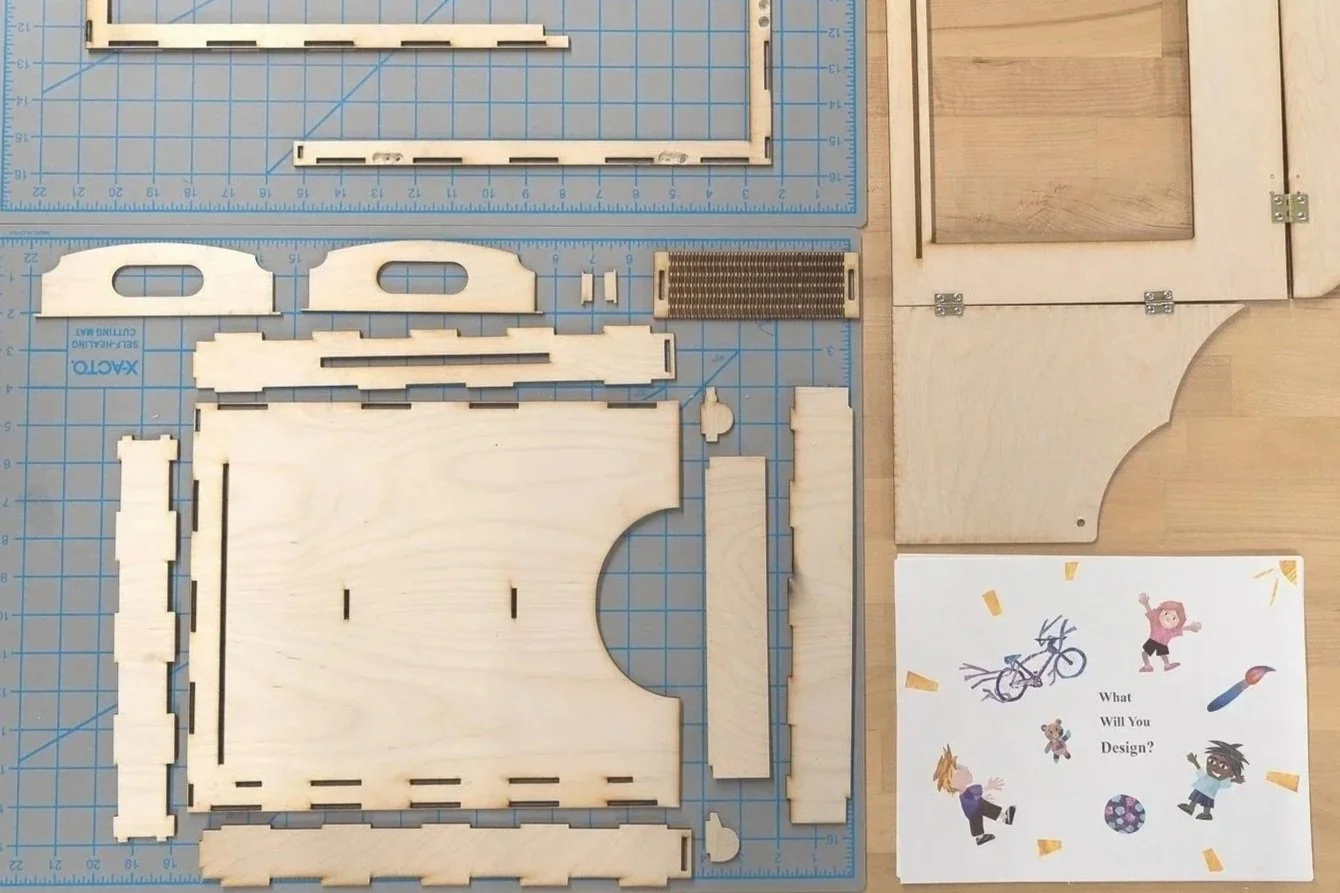
Research-through-Design
Designed systems function as research instruments. Visual, interactive, and experiential artifacts are developed to operationalize conceptual variables and generate analyzable responses.
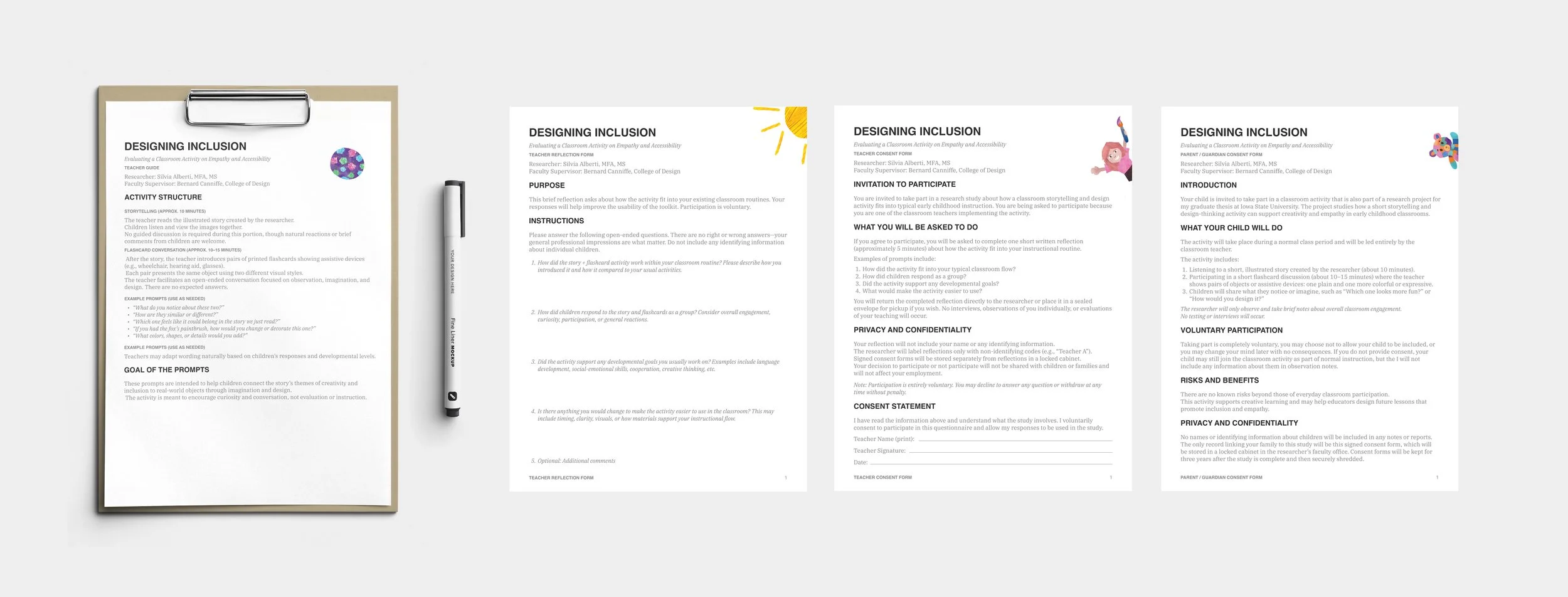
Context-Situated Inquiry
Each implementation is embedded within a specific institutional or community setting. Research questions adapt to local conditions while the methodological structure remains consistent.
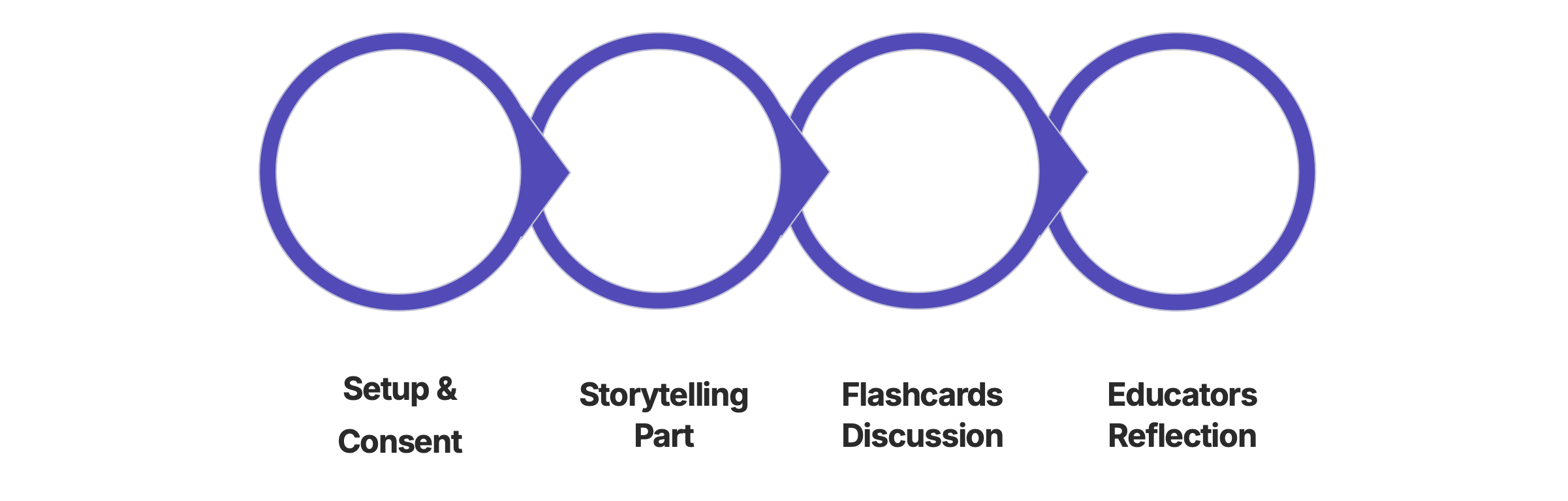
Iterative Knowledge
Findings are documented, compared, and refined across implementations. Insights from one context inform the next, enabling cumulative theoretical development.
Teaching Integration
This research framework informs my teaching approach across studio courses in design, while adapting to the specific goals of each class. When appropriate, courses are structured using concept-driven and context-situated methodologies that translate conceptual questions into visual and interactive systems.
Students are encouraged to treat design as inquiry: moving from idea to structured form through investigation, critique, and iteration. In this way, the classroom becomes a space where conceptual rigor, formal experimentation, and social awareness intersect.
future Trajectory
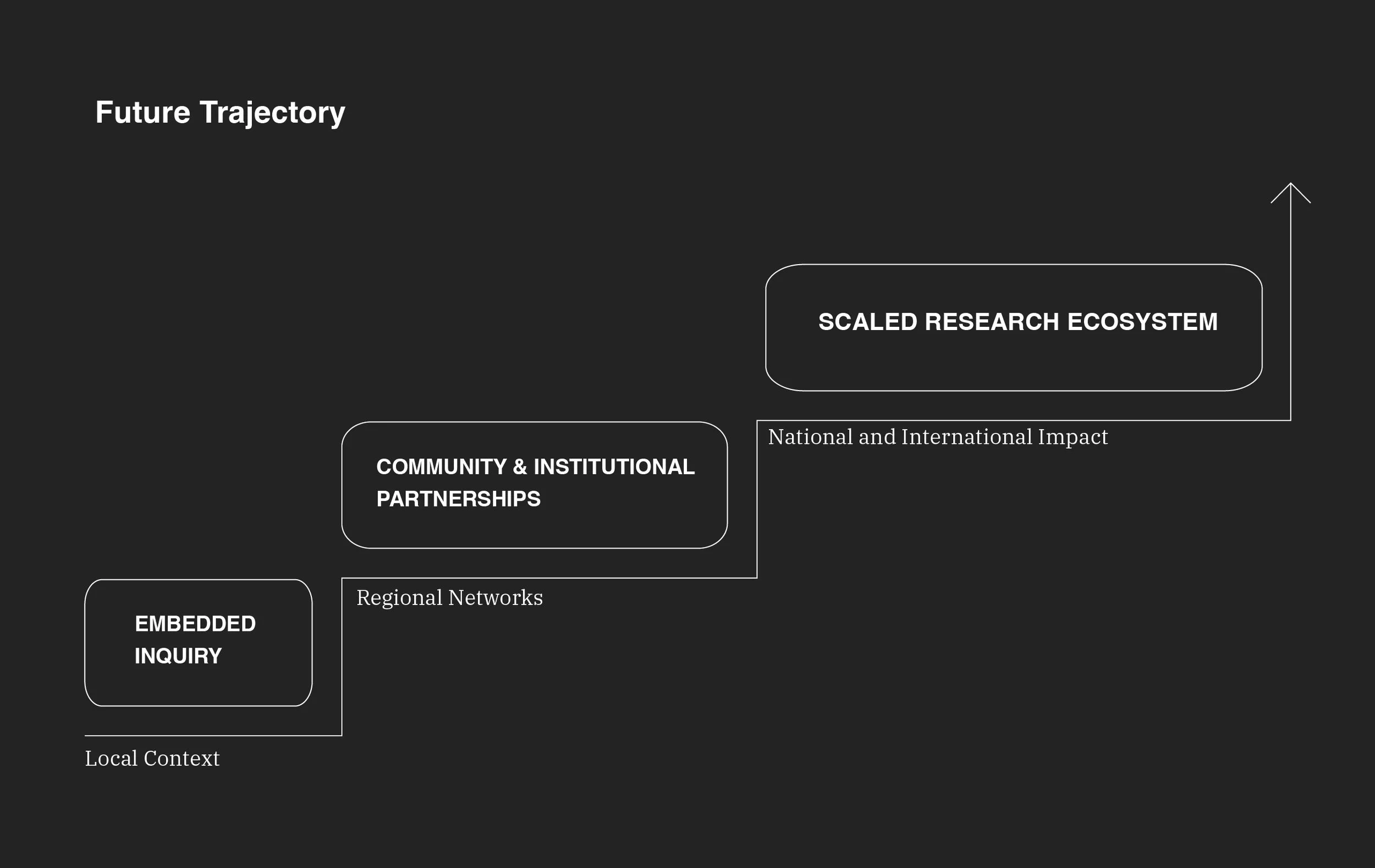
Future investigations will emerge from socially situated questions within the institutional contexts in which the work is embedded. Each study examines how specific design decisions can intervene in those conditions, while maintaining a consistent methodological structure.
As new technologies emerge, they will be integrated as experimental variables to expand how participants engage with and respond to designed systems.
These investigations will also inform studio pedagogy, allowing research questions, methods, and emerging tools to directly shape curriculum and student learning.
• New participation contexts • Emerging and embedded technologies • Interdisciplinary collaboration • Expanded community partnerships
• New participation contexts • Emerging and embedded technologies • Interdisciplinary collaboration • Expanded community partnerships
Explore the First Implementation
Desiging Inclusion:
A Toolkit for Early Childhood Classrooms