Desiging Inclusion:
A Toolkit for Early Childhood Classrooms
Aesthetic Framing and Disability Perception in Early Childhood Iowa State University Child Development Laboratory School Ages 3 - 5.
Classroom-Embedded Investigation
This study investigates how aesthetic framing influences early childhood perception of assistive devices within classroom environments. Conducted at Iowa State University’s Child Development Laboratory School, the IRB-approved study engaged 31 children (ages 3–5) and three educators through a structured, two-phase storytelling intervention. Assistive devices were presented sequentially in grayscale and redesigned formats to isolate aesthetic variables and prompt guided discussion.
Observational field notes and educator questionnaires revealed a patterned shift from functional descriptions toward imaginative and identity-based reinterpretations following aesthetic intervention. Visual detail and color were consistently associated with positive affect and personalization.
The study operates as an exploratory qualitative design-based investigation and establishes a transferable methodological model for examining how visual and narrative structures mediate perception in early childhood contexts. Findings contribute to broader research on design as a social mediator and provide a foundation for scaled, cross-context inquiry.
Research Questions
Conceptual Focus
How do aesthetic framing variables (color, form, narrative structure) mediate children’s interpretations of assistive devices in early childhood (ages 3–5)?
Mechanism of Inquiry
How does structured storytelling function as an interaction mechanism that shapes children’s articulation of social difference?
Applied Implication
How can design-based interventions support educators in introducing assistive devices in ways that reduce stigma and foster inclusion among children ages 3–5?
Literature Positioning & Gap
This investigation draws from scholarship in disability studies, early childhood education, and assistive technology design.
Existing research has examined:
Stereotypes and ableism in children’s literature (Hayden & Prince, 2020)
Stigma and labeling in disability contexts (Green et al., 2005)
Representation and classroom read-aloud practices (Prince & Hayden, 2021)
Aesthetics and perceived stigma in assistive technology (Santos et al., 2022)
Two critical gaps remain:
Limited research examines how aesthetic framing functions as a mediating variable in shaping early childhood (ages 3–5) interpretations of assistive devices.
Few studies operationalize design-led, classroom-embedded interventions as empirical methods for investigating stigma formation at this developmental stage.
Context & Participants
-

Site
Iowa State University Child Development Laboratory School
-

Participants
31 children (3-5 years old)
3 classroom educators -

Setting
Classroom-embedded implementation
Integrated into existing instructional routines -

Approach
Classroom-embedded design intervention
Naturalistic observation and guided discussion
Methodological Design
-
Research Framework
• Exploratory qualitative design-based study
• Research-through-design methodology
• Classroom-embedded implementation -
Intervention Structure
• Two-phase structured storytelling activity
• Sequential grayscale → redesigned comparison
• Facilitated group discussion -
Data Collection
• Non-reactive observational field notes
• Language pattern documentation
• Post-activity educator questionnaires -
Analytic Approach
• Thematic qualitative synthesis
• Comparative analysis (functional vs. identity-based descriptions)
• Triangulation with educator reflections
Visual Components of the Intervention
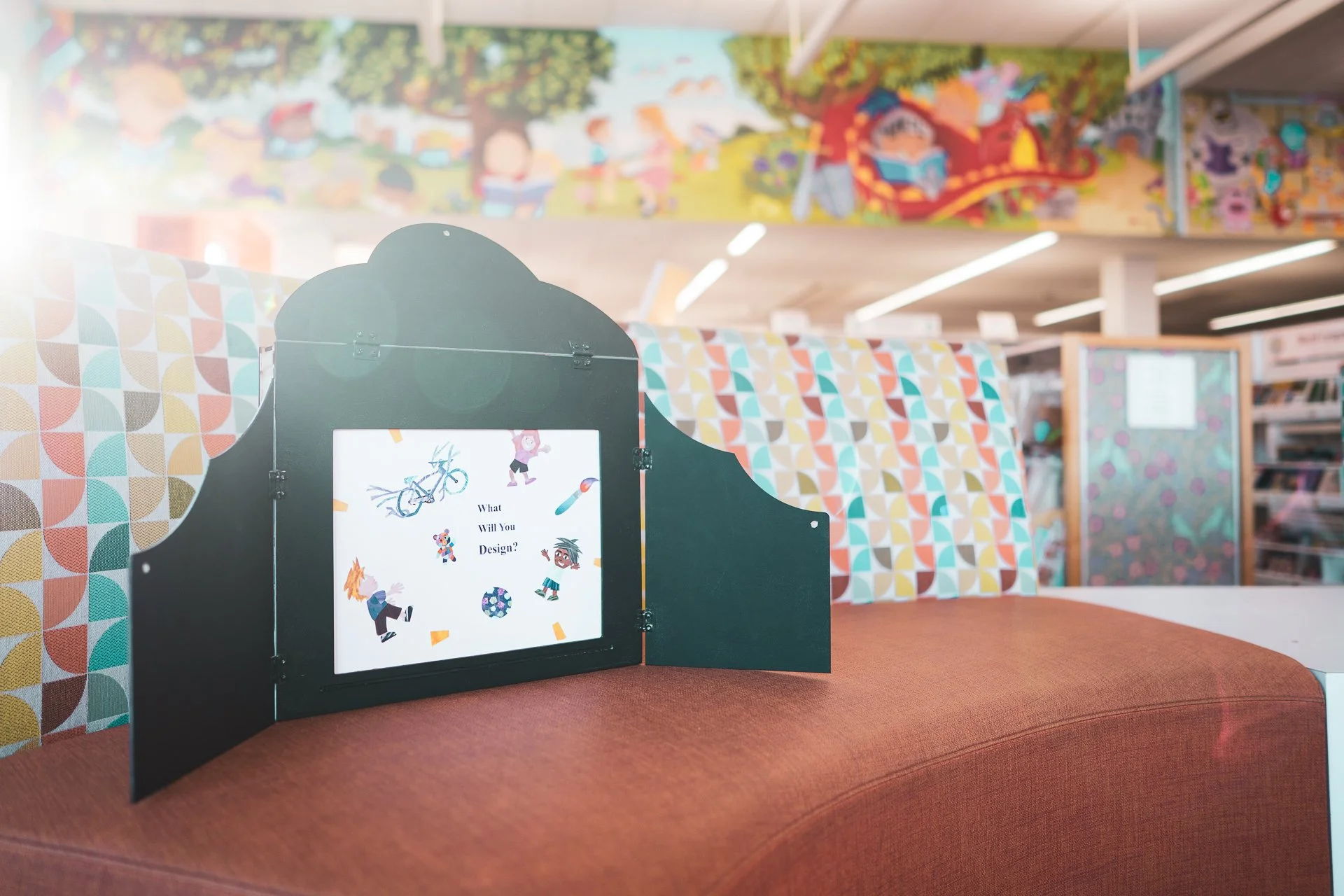
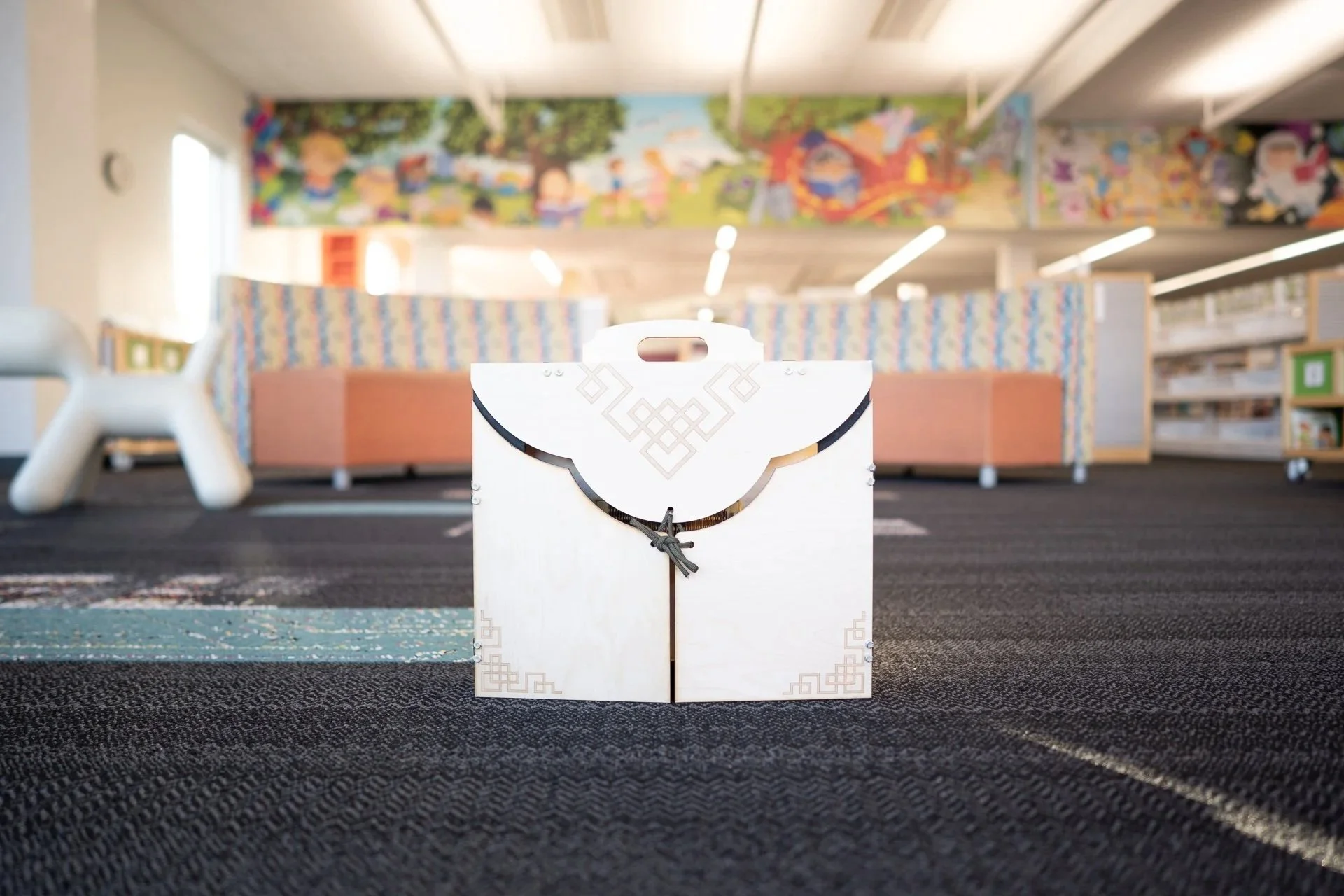
Kamishibai Theater

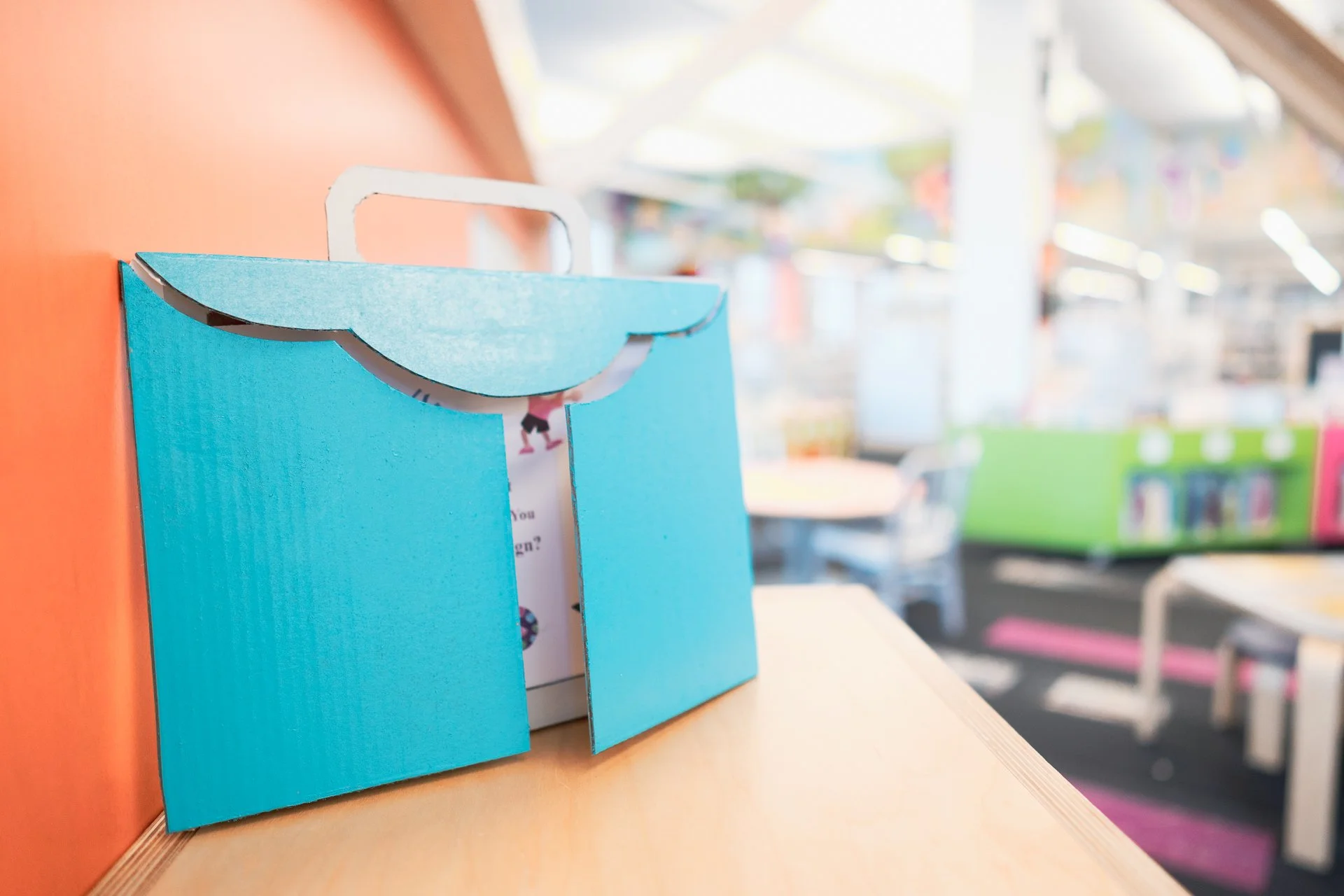
Spatial Engagement Structure
What it is
A portable storytelling frame inspired by traditional Kamishibai, adapted to structure the narrative phase of the activity.
Why it matters
The theater functions as:
A visual boundary that focuses collective attention during storytelling
A structured beginning that signals the start of a shared narrative experience
A facilitator-facing interface that supports paced, sequential story delivery
It frames the story as a collective event before transitioning into the flashcard discussion phase.
Scalability
The system is available in:
Cardboard (low-cost classroom deployment)
Laser-cut wood (durable institutional use)
Design files and illustrated assembly guides are included to enable educator replication.
Story Cards
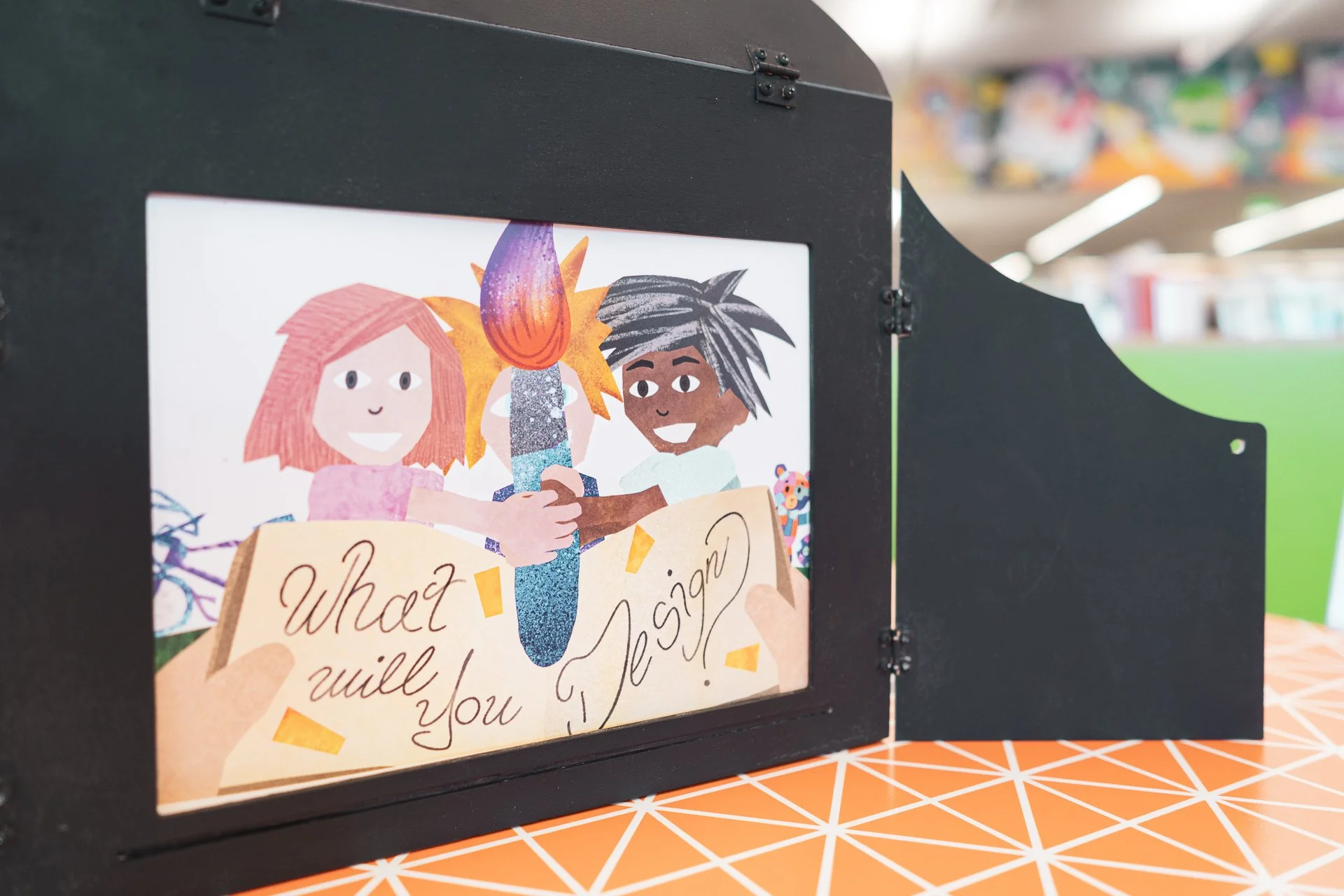
Narrative Framing Mechanism
What it is
A short illustrated story introducing design and imagination through the metaphor of a paintbrush that can change how familiar objects look.
Why it matters
The story demonstrates visual transformation using everyday objects (such as a ball, teddy bear, and bike) that function properly but lack visual expression. Through the paintbrush, color and surface changes alter how these objects feel without changing what they do.
In the final scene, the paintbrush begins to run out of imagination and cannot complete the transformation alone. The audience is invited to help, creating a structured transition from passive listening to active participation.
Assistive devices are not depicted in the story. Instead, the narrative models transformation before introducing the flashcards, grounding imagination in visible change rather than abstract instruction.
Research Role
The story functions as a framing condition within the intervention. By demonstrating transformation first, it establishes a shared logic of redesign that children later apply when encountering grayscale assistive devices.
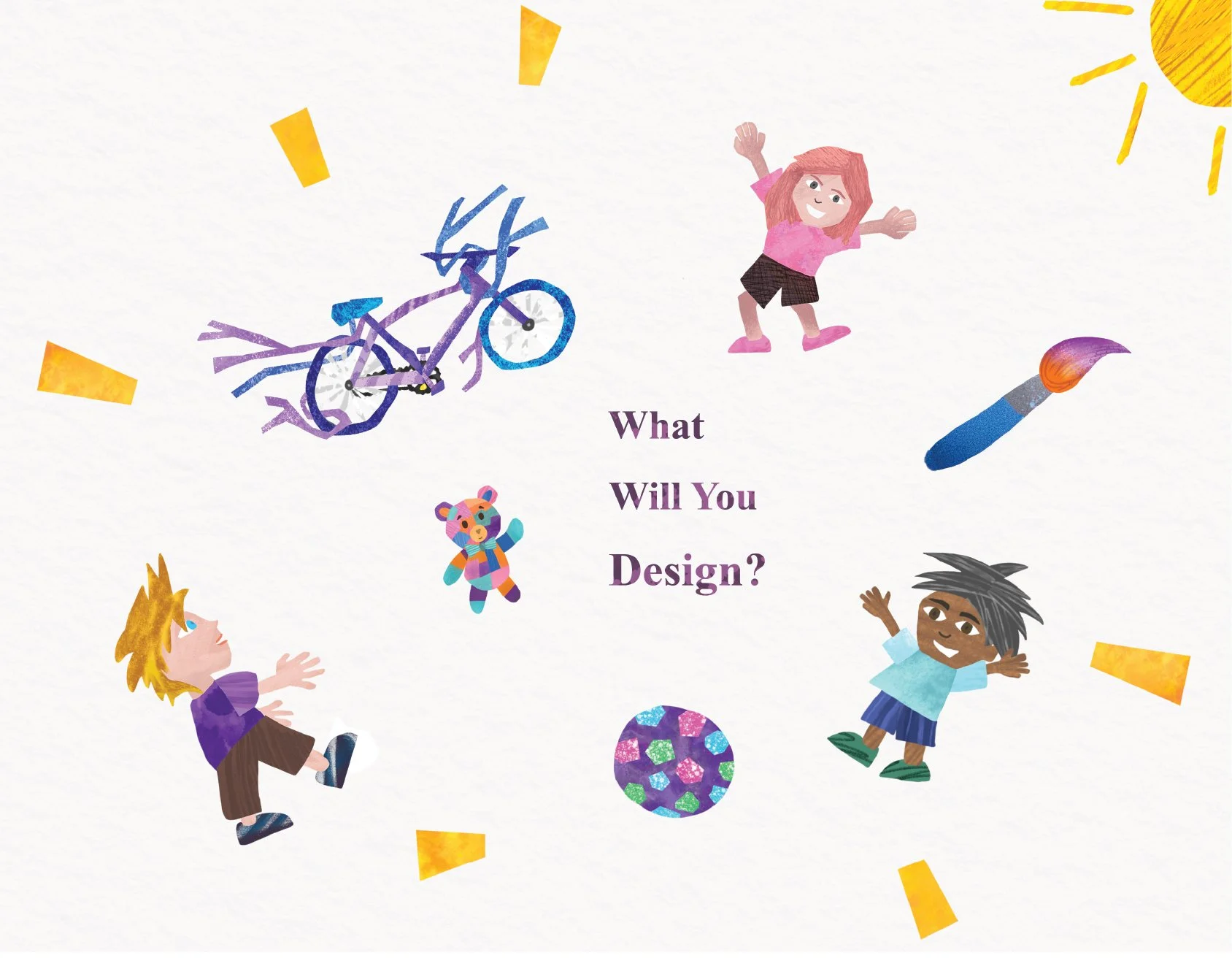
"What Will You Design?" Story text
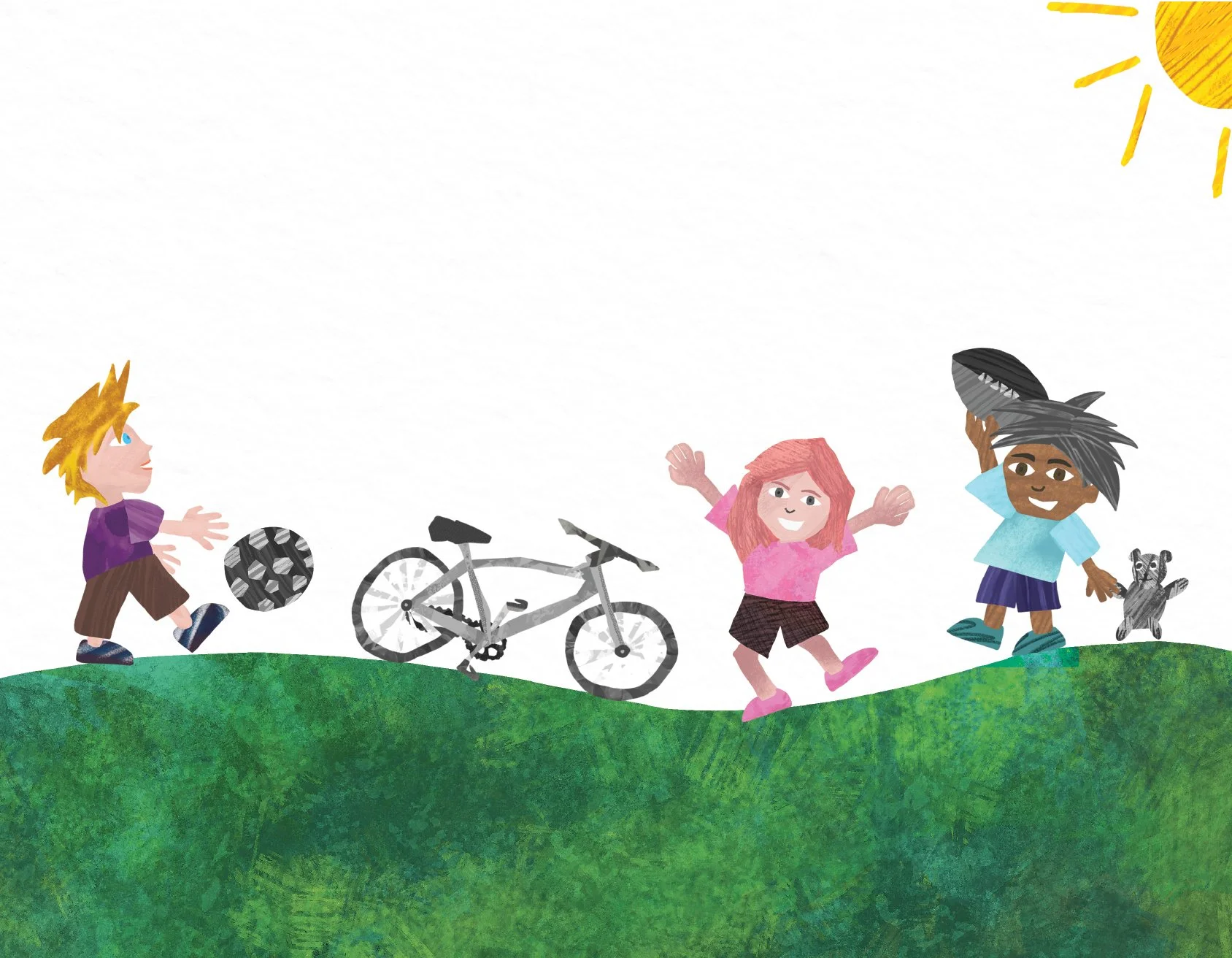
It was a sunny day, and the friends were playing outside. But everything they were using looked plain… and a little boring.
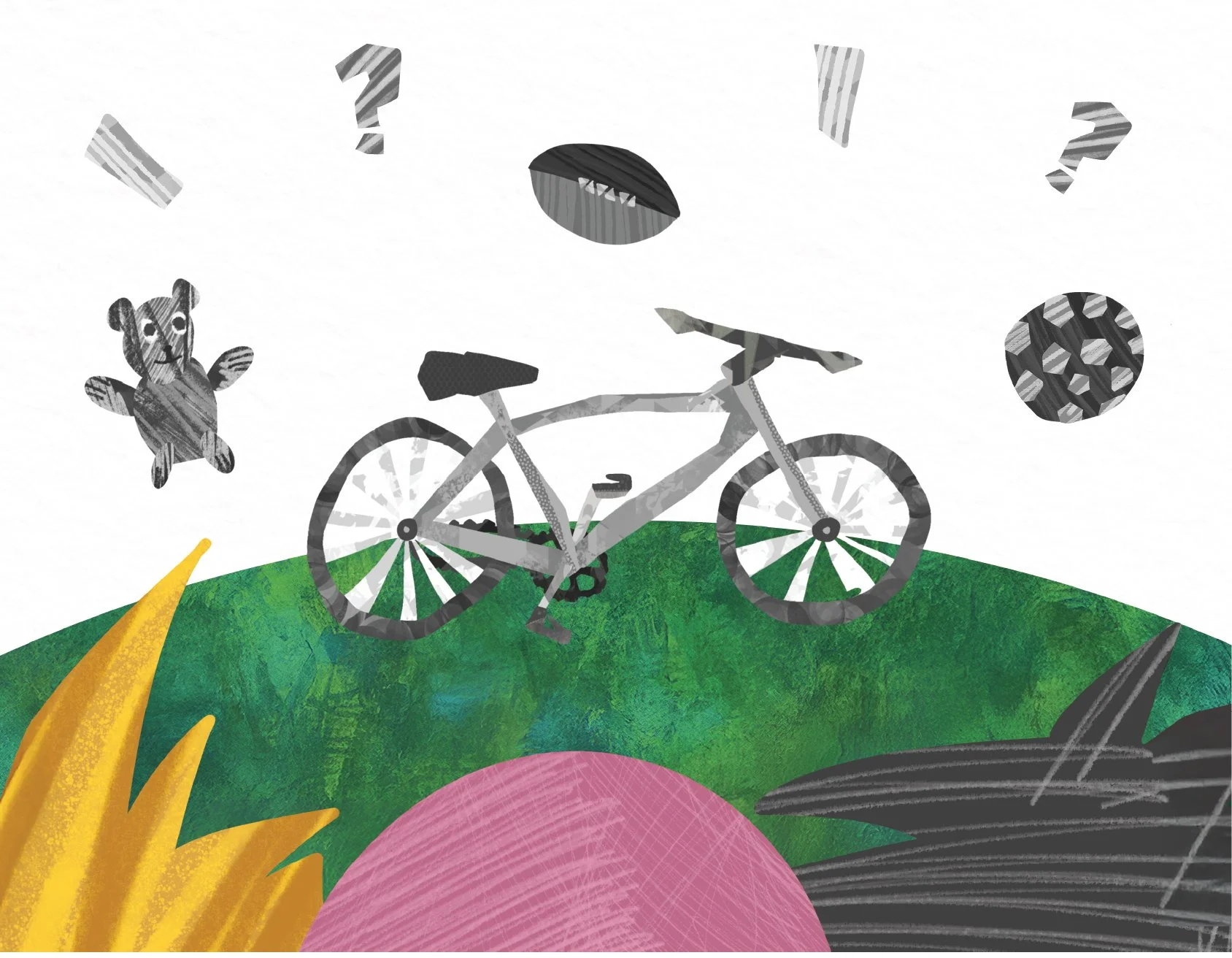
There were some balls, a teddy bear, and even a bike. They worked fine… but they didn’t look very fun.
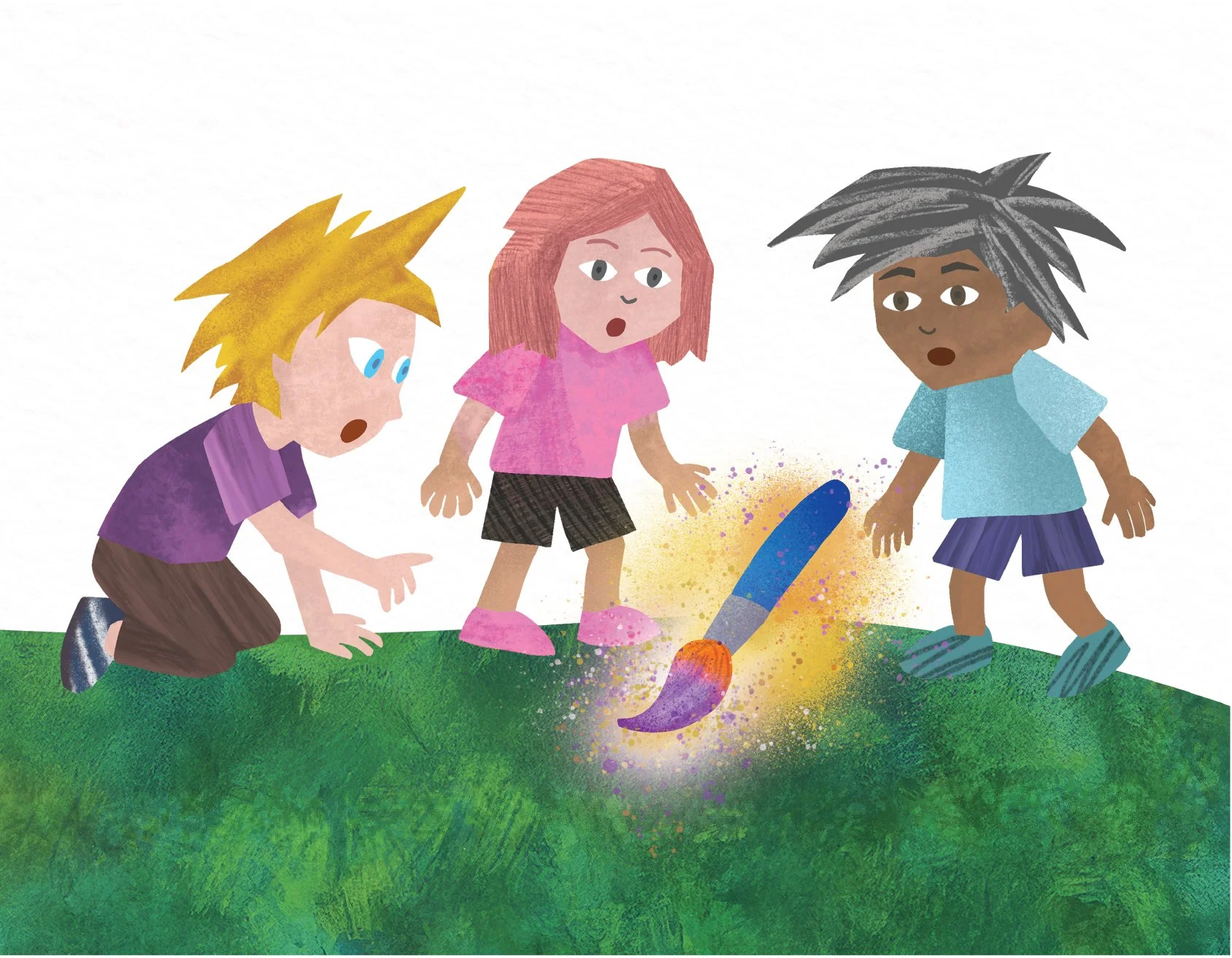
Then something shiny peeked out from the grass. The friends leaned closer… It was a paintbrush! Glowing bright and full of color.

The brush sparkled in their hands. They almost heard it whisper, “With this brush, you can change how things look!”

Whoooosh! The ball changed just a little. It looked brighter, with tiny sparkles. The friends giggled. “That already looks better!”

Zap! The teddy bear twirled and shimmered. Now it even waved its little paw! “Whoa!” the friends cheered.
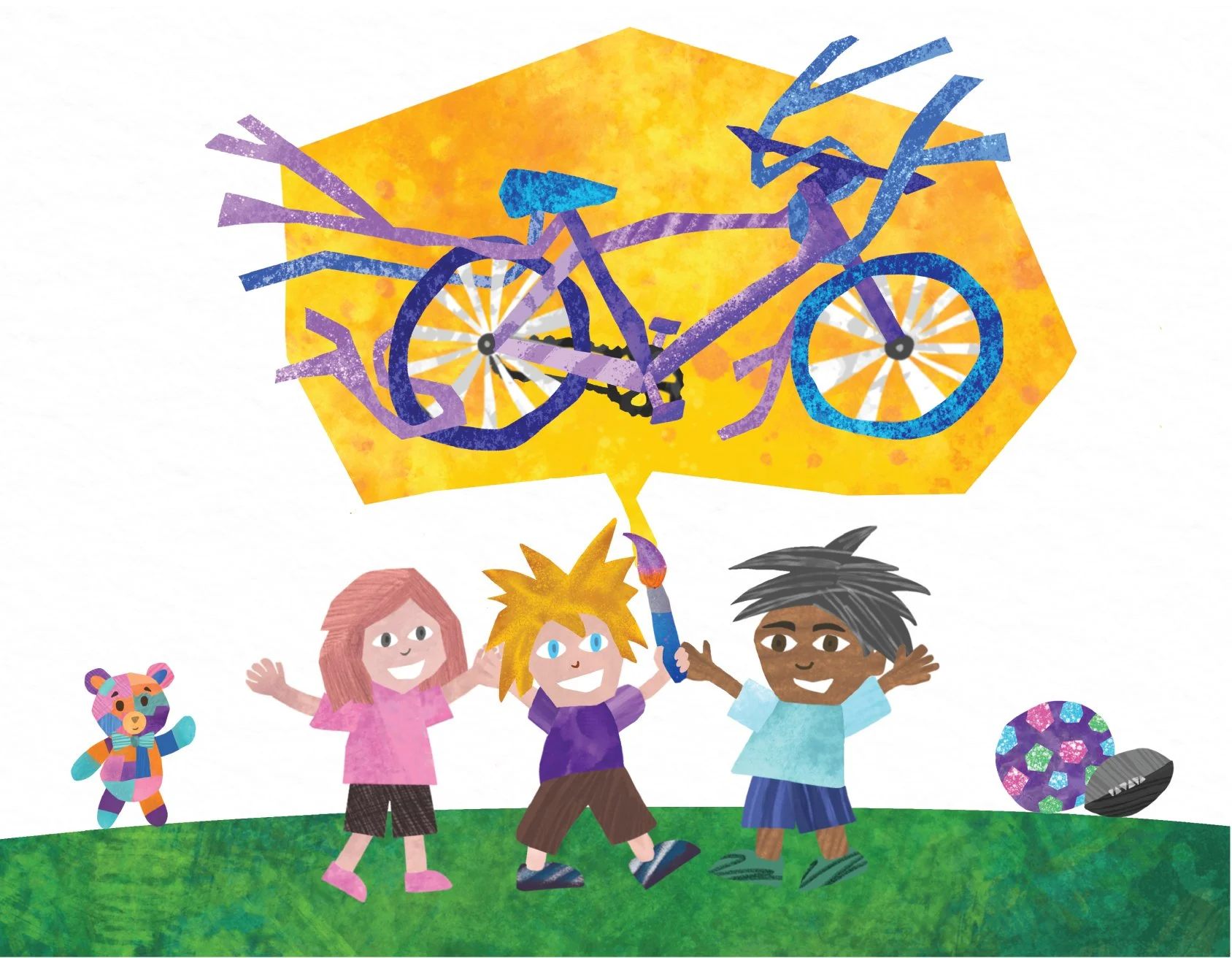
Ping! The bike burst with colors and ribbons. It looked full of magic. The friends jumped with excitement.

But then… the brush started to slow. Its glow faded. The magic was almost gone.
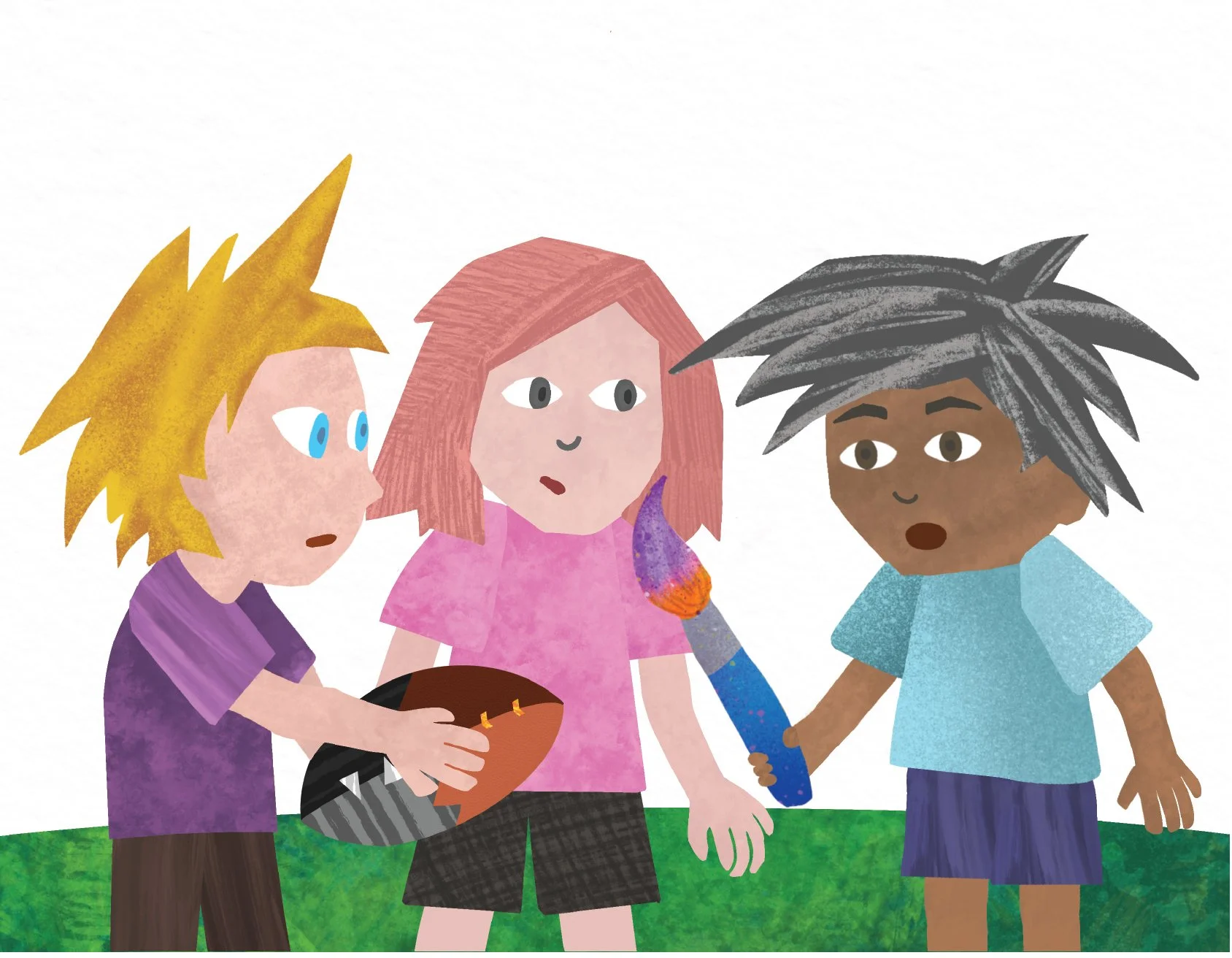
“Maybe the brush needs help,” one friend said. “Maybe it needs YOUR imagination!”

The friends held the brush out. “Here friends—take it! What will YOU design today?”
Flashcard System
Aesthetic Variable Isolation
What it is
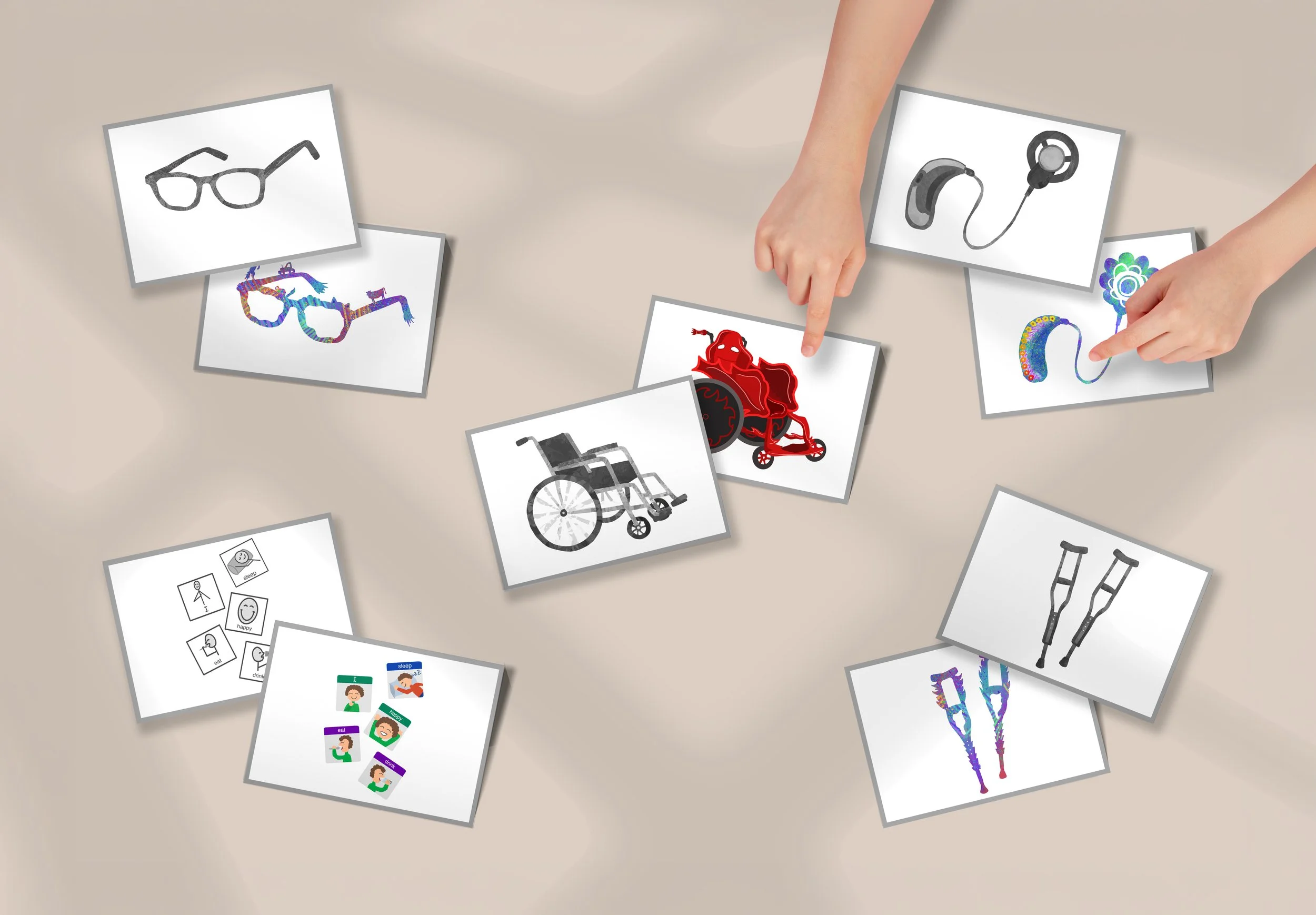
A set of flashcards depicting assistive devices, presented one at a time. Each device appears first in a grayscale condition, followed by a redesigned version on the reverse side.
Why it matters
The flashcard structure creates a direct visual contrast between baseline and aesthetic variation. The grayscale condition foregrounds form and function, while the redesigned condition introduces color and surface detail without altering purpose.
The reverse-side reveal functions as structured visual feedback. It does not present a correct answer, but sustains engagement by offering an additional design possibility.
Research Role
The flashcards structure discussion by providing a concrete object for description and redesign. The grayscale condition prompts initial interpretation; the reintroduction of the paintbrush invites imagined transformation. This sequencing allows observation of shifts in language and affect between baseline and redesign conditions.
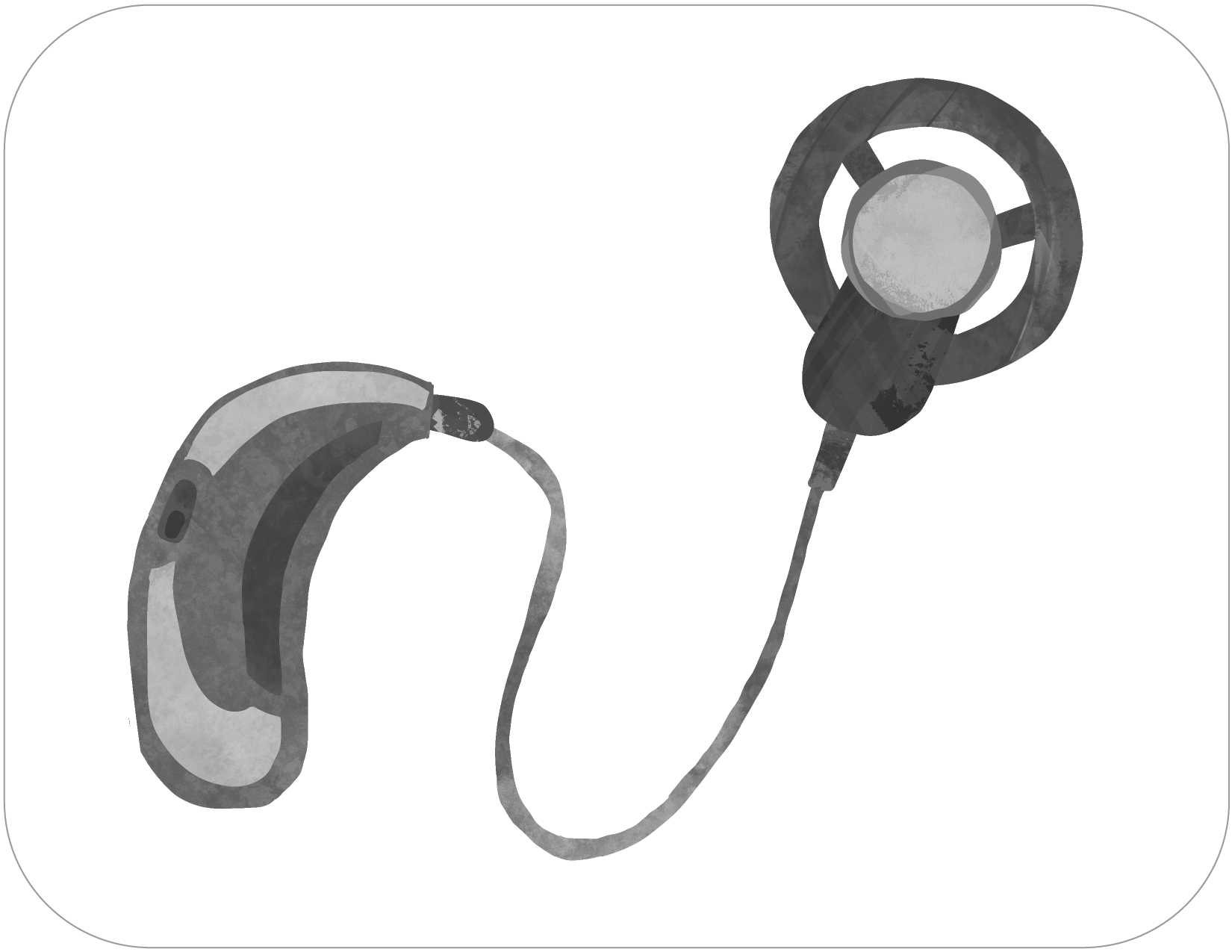
Hearing Aid (Grayscale)
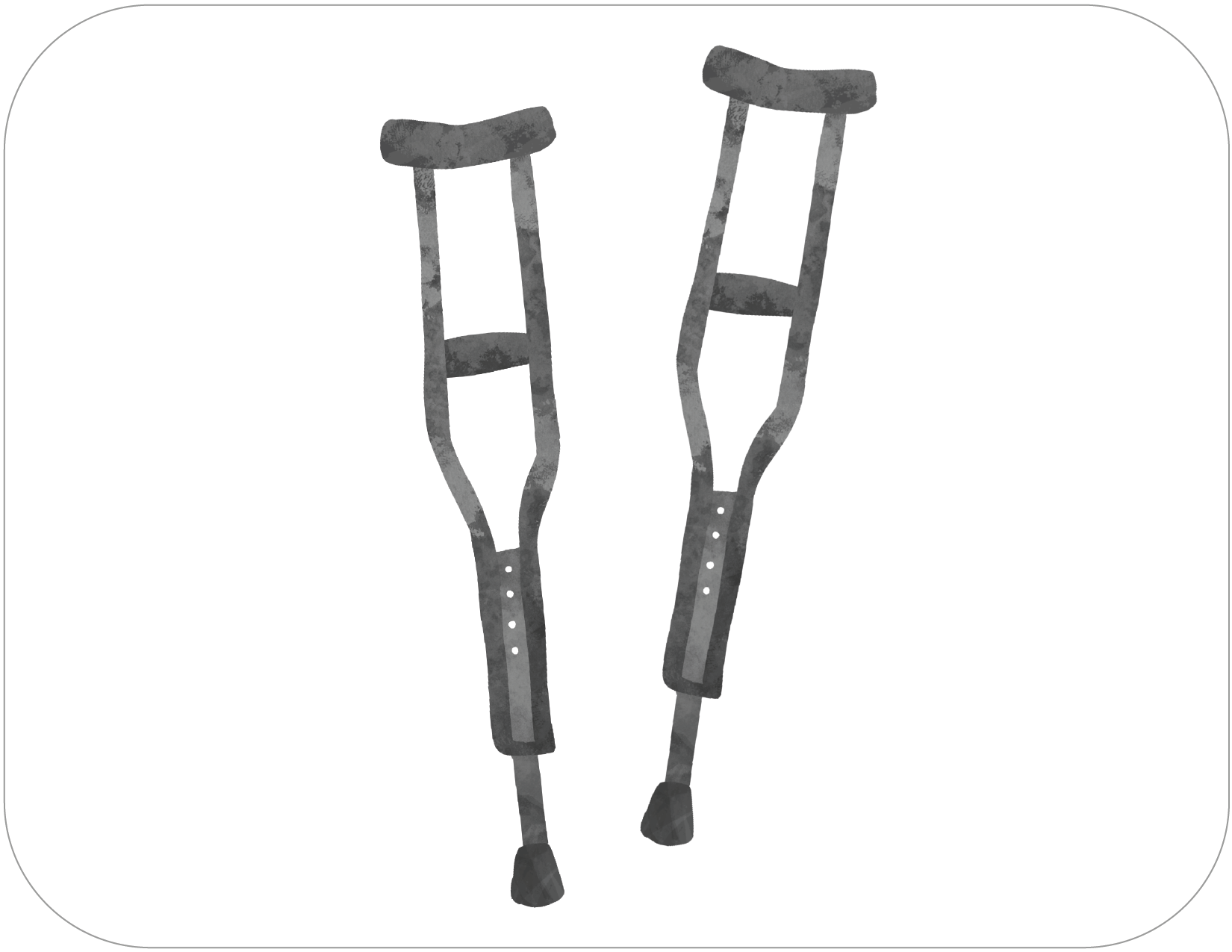
Crutches (Grayscale)

Glasses (Grayscale)
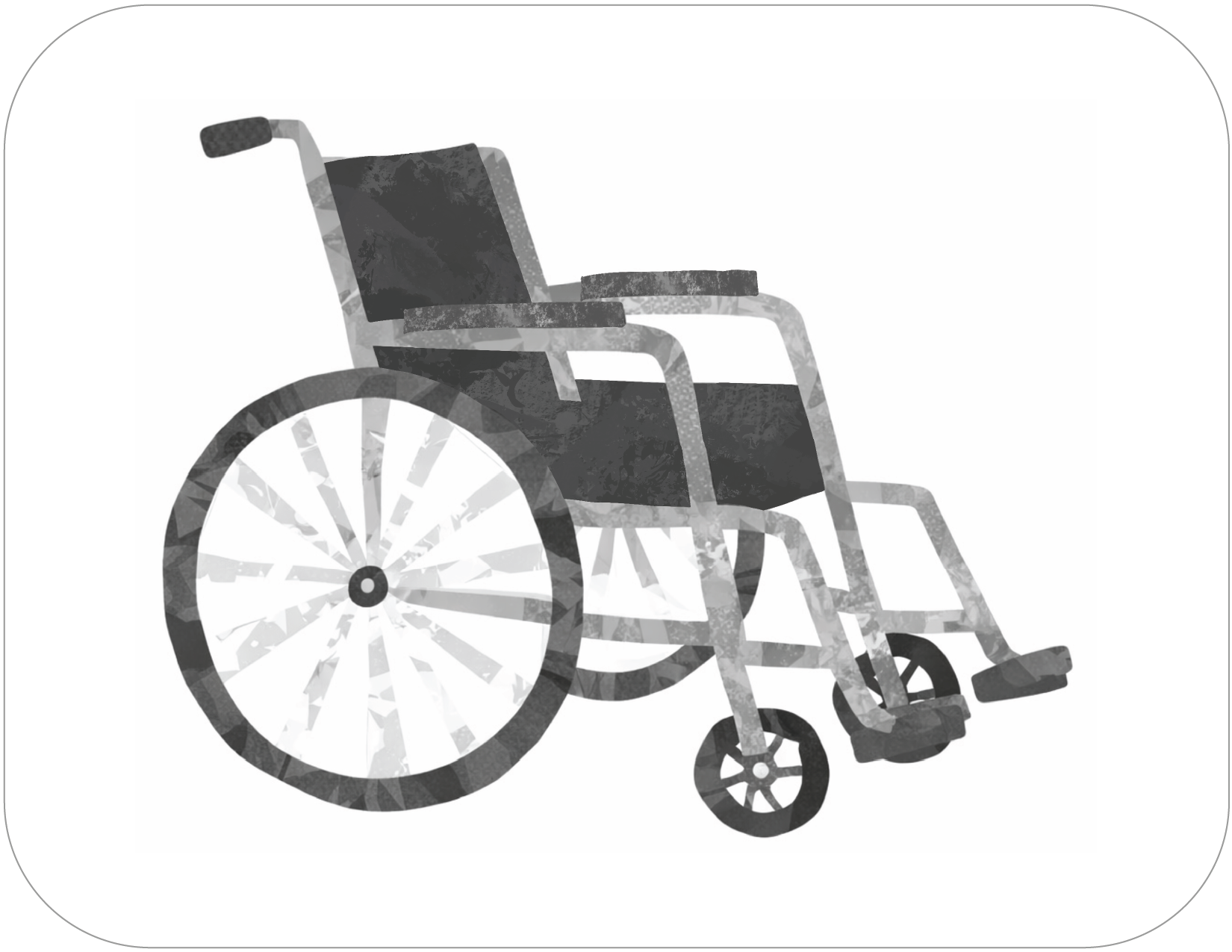
Wheelchair (Grayscale)
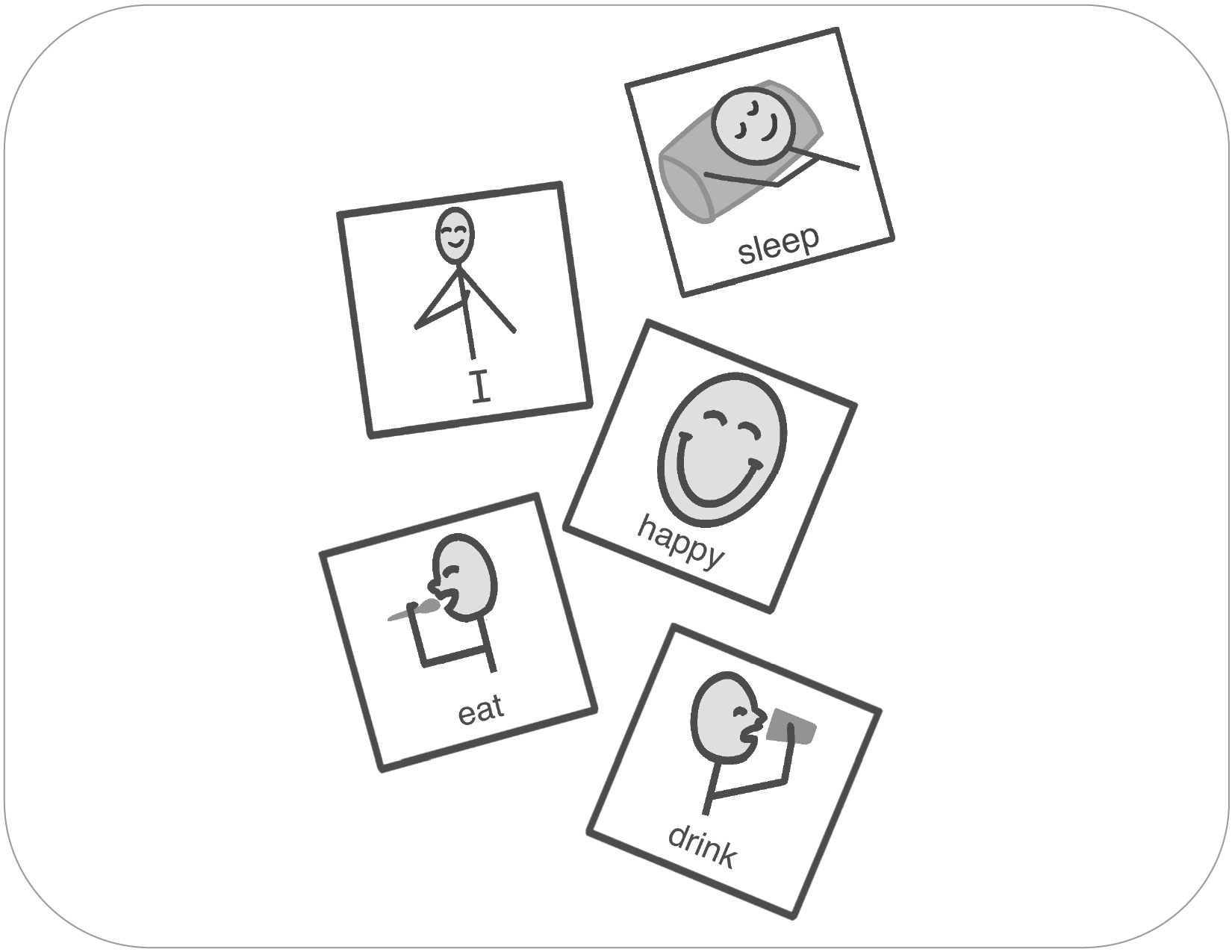
AAC Cards (Grayscale)
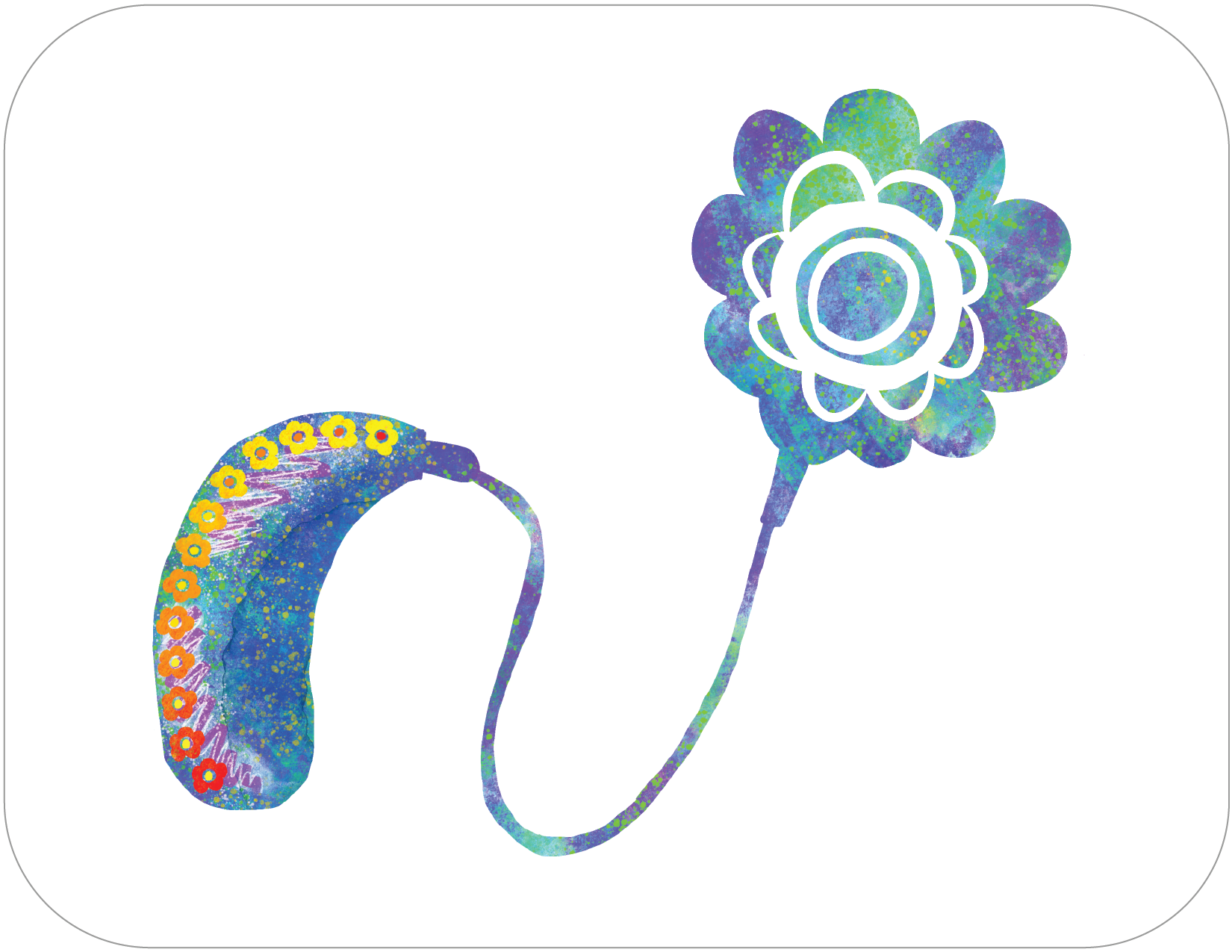
Hearing Aid (Redesigned)
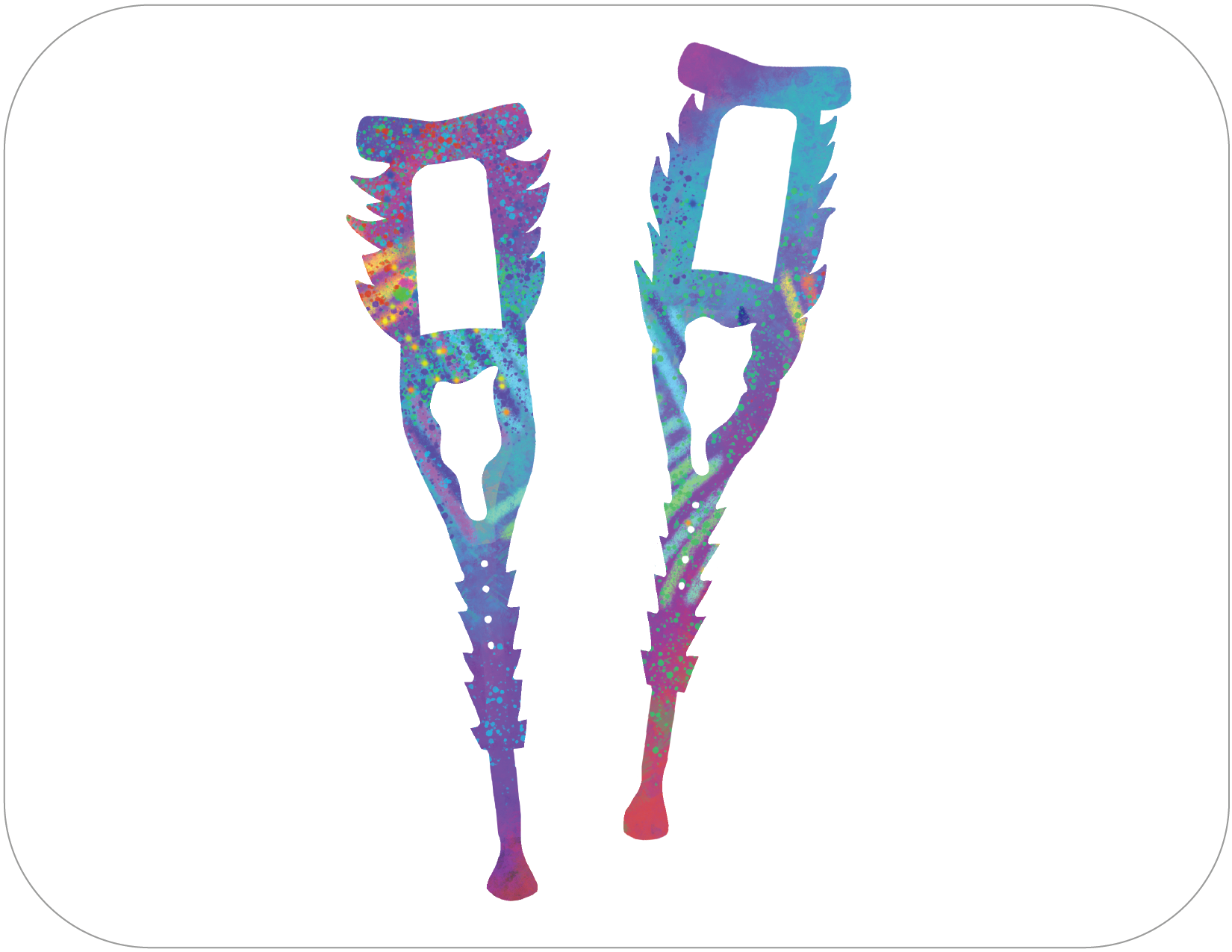
Crutches (Redesigned)
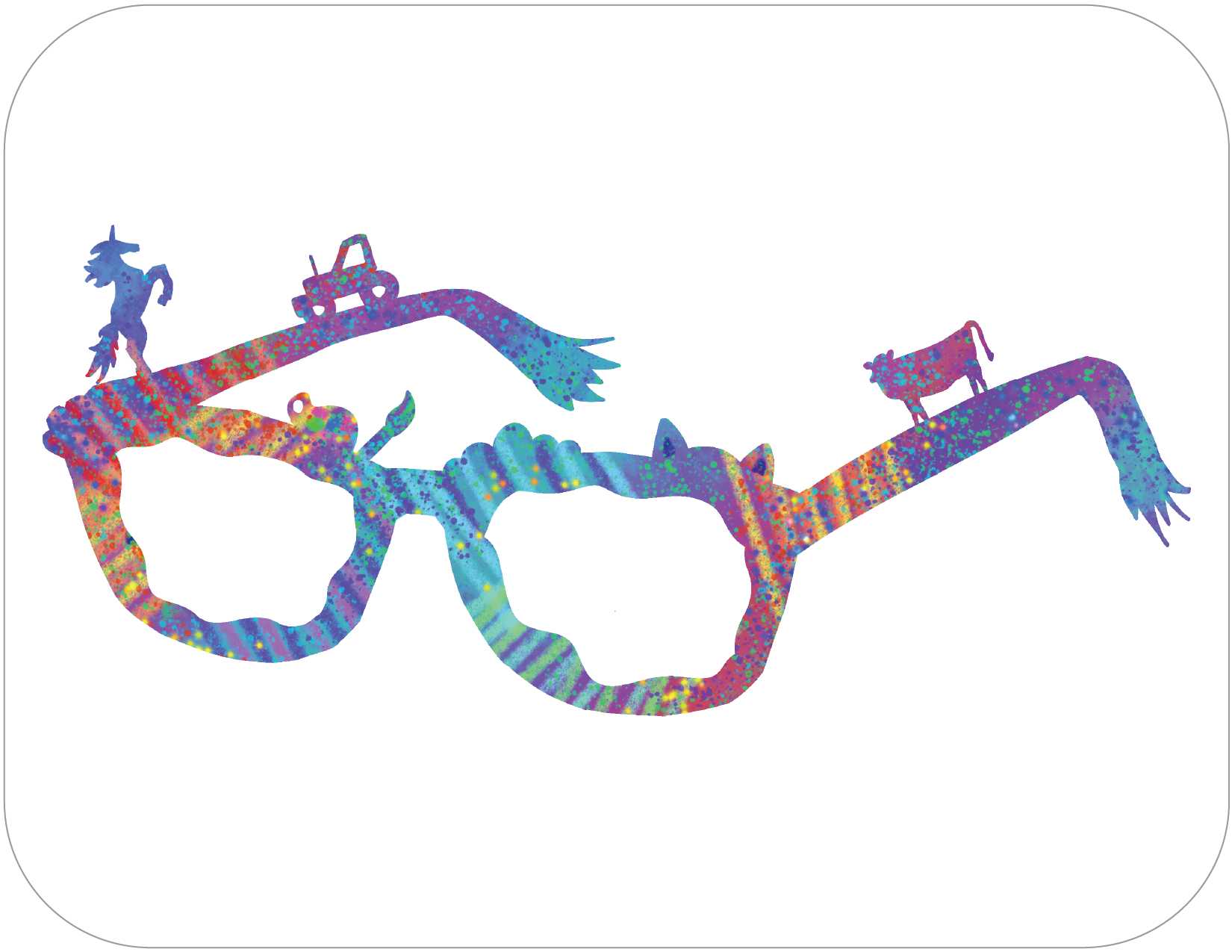
Glasses (Redesigned)
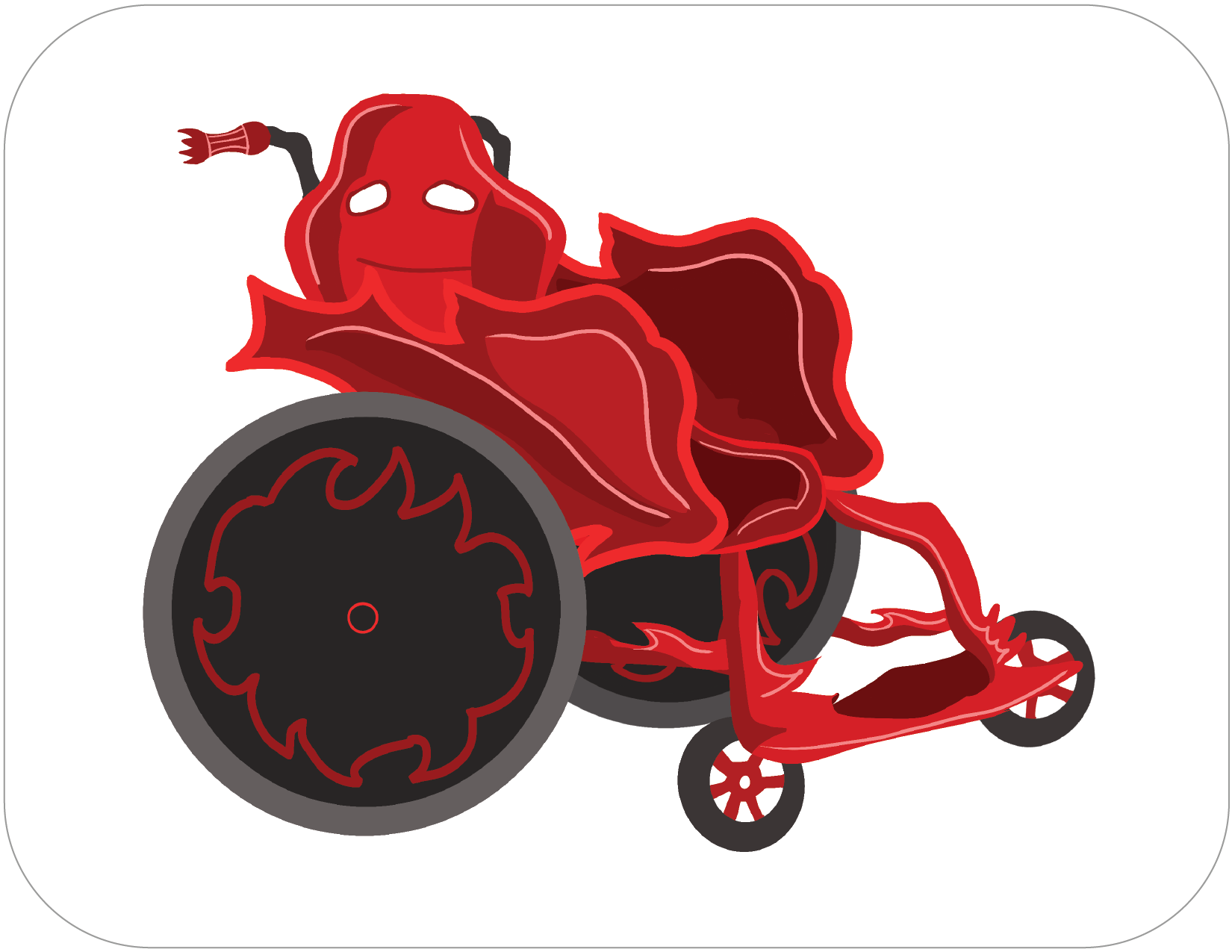
Wheelchair (Redesigned)
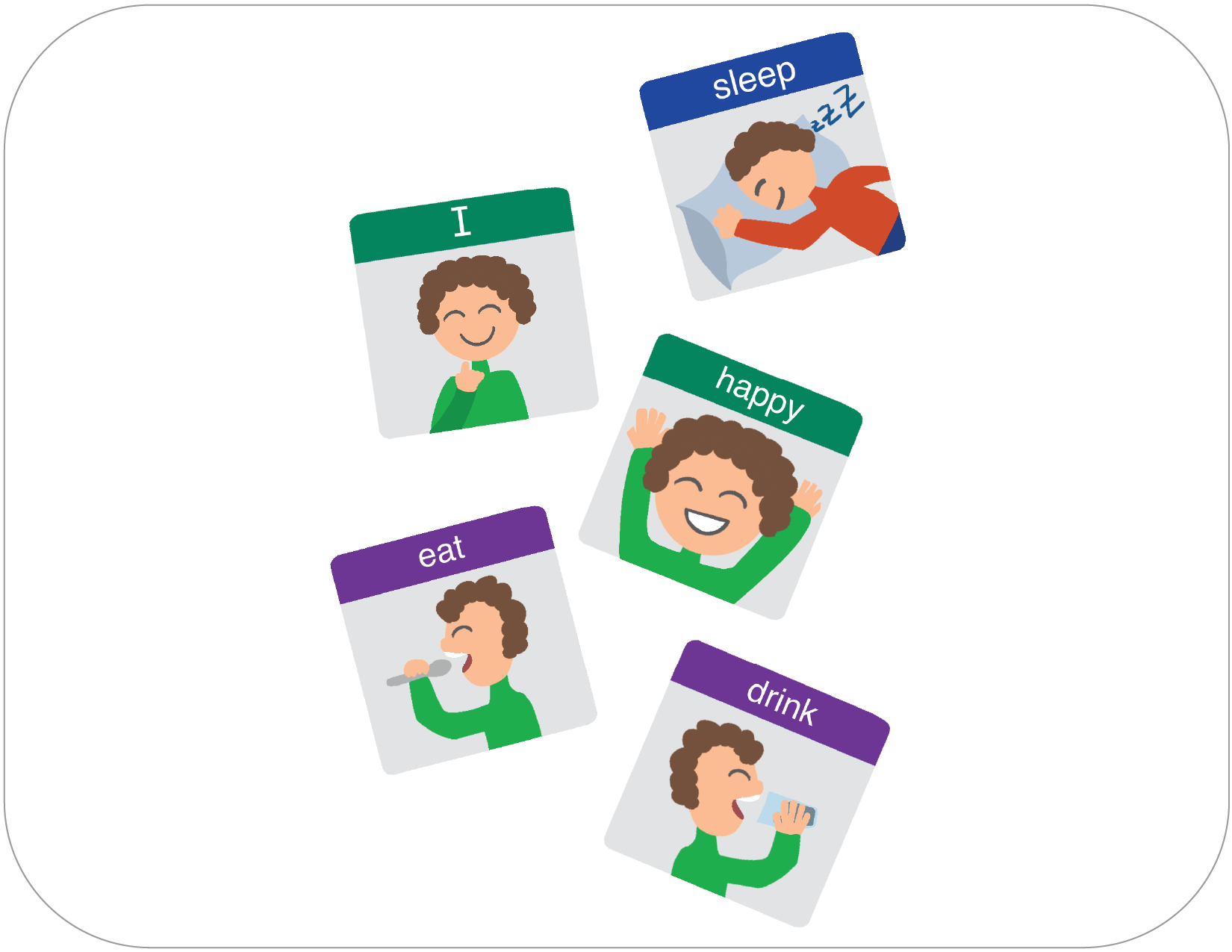
AAC Cards (Redesigned)
FINDINGS
Aesthetic Framing Mediates Emotional Interpretation
Across all devices, children consistently associated grayscale presentations with negative affective language such as “boring,” “sad,” and “dull.” In contrast, redesigned versions elicited spontaneous descriptors such as “happy,” “exciting,” “special,” and “fast.”
This pattern emerged without prompting. Color, sparkle, and visual detail were repeatedly interpreted as emotional improvement rather than merely decorative enhancement.
Interpretation:
Aesthetic variation functioned as an affective mediator. Visual framing influenced emotional evaluation independent of device functionality.
Shift from Utility to Identity
Initial responses frequently centered on functional explanations (“it helps you walk,” “broken legs”). However, once redesign prompts were introduced, children shifted toward imaginative and identity-based interpretations (“unicorn wheels,” “super wheelchair,” “sprinkles”).
Children emphasized personalization over uniformity, repeatedly stating that if two peers used the same device, “they should look different.”
Interpretation:
The intervention shifted discourse from assistance-based framing toward expression and individuality.
Narrative Structure Facilitated Open Participation
The storytelling arc (paintbrush → invitation to redesign) produced high engagement during early phases. Children tracked the narrative logic and demonstrated understanding of design as agency (“someone who makes stuff”).
Teacher feedback indicated:
Full group participation
High levels of excitement
Creative thinking and cooperation
The metaphor of the paintbrush was interpreted as permission to change and ownership over the object.
Interpretation:
Narrative framing reduced evaluative pressure and supported collaborative meaning-making.
Familiarity Influences Initial Response
Devices such as glasses and wheelchairs were immediately recognized. Hearing aids required contextual explanation before emotional shifts occurred.
Once understood, children rapidly transitioned from confusion to empathetic redesign.
Interpretation:
Explanation and aesthetic reframing operate together in shaping perception.
Design & Facilitation Constraints
Attention patterns indicated that five flashcards approached the upper limit for sustained engagement, particularly among younger children (3-5 years old).
Teachers suggested:
Vocabulary scaffolding
Fewer cards for younger groups
Extension into art-making activities
Interpretation:
The intervention is scalable but benefits from age-adjusted pacing and material expansion.
Contribution & Implications
Design Research
This study extends research-through-design by operationalizing aesthetic framing as an analyzable variable within a structured classroom intervention. The work positions designed systems (story, theater, flashcards) as research instruments that structure perception and generate observable shifts in language and interpretation.
Methodologically, the study demonstrates how concept-driven design can function as empirical inquiry within situated learning environments.
Early Childhood Education
The intervention provides a structured, classroom-embedded model for introducing assistive devices without deficit framing. By sequencing narrative transformation before device discussion, the study reduces evaluative pressure and encourages participatory reinterpretation.
Findings suggest that structured storytelling combined with guided redesign discussion can support empathy, creative engagement, and inclusive dialogue in early childhood settings. The toolkit format, educator-facing materials, and replicable activity design position the work for scalable adoption across educational contexts.
Disability & Assistive Technology Studies
The findings indicate that aesthetic framing functions as a mediating factor in early childhood perception of assistive devices. Color, ornament, and visual personalization were consistently associated with positive affect and identity-based interpretation, shifting discourse away from purely functional descriptions.
This suggests that assistive devices operate not only as medical tools, but as socially interpreted artifacts shaped by design decisions. The study introduces design intervention as a mechanism for examining and potentially mitigating early stigma formation through aesthetic and narrative structuring.
Future Research Directions
Findings from Implementation 01 indicate that aesthetic variation functions as an affective mediator in early childhood interpretation. However, the scope of this study was limited to ages 3–5 within a single institutional context.
Further research is needed to examine:
Whether this mediating effect persists across developmental stages
How interaction structure influences perception beyond static visual artifacts
How aesthetic framing operates in different social contexts and populations
These questions form the basis of subsequent investigations, extending the conceptual model into new environments while maintaining methodological continuity.
Classroom Implementation Version
View the educator-facing toolkit and downloadable materials.